
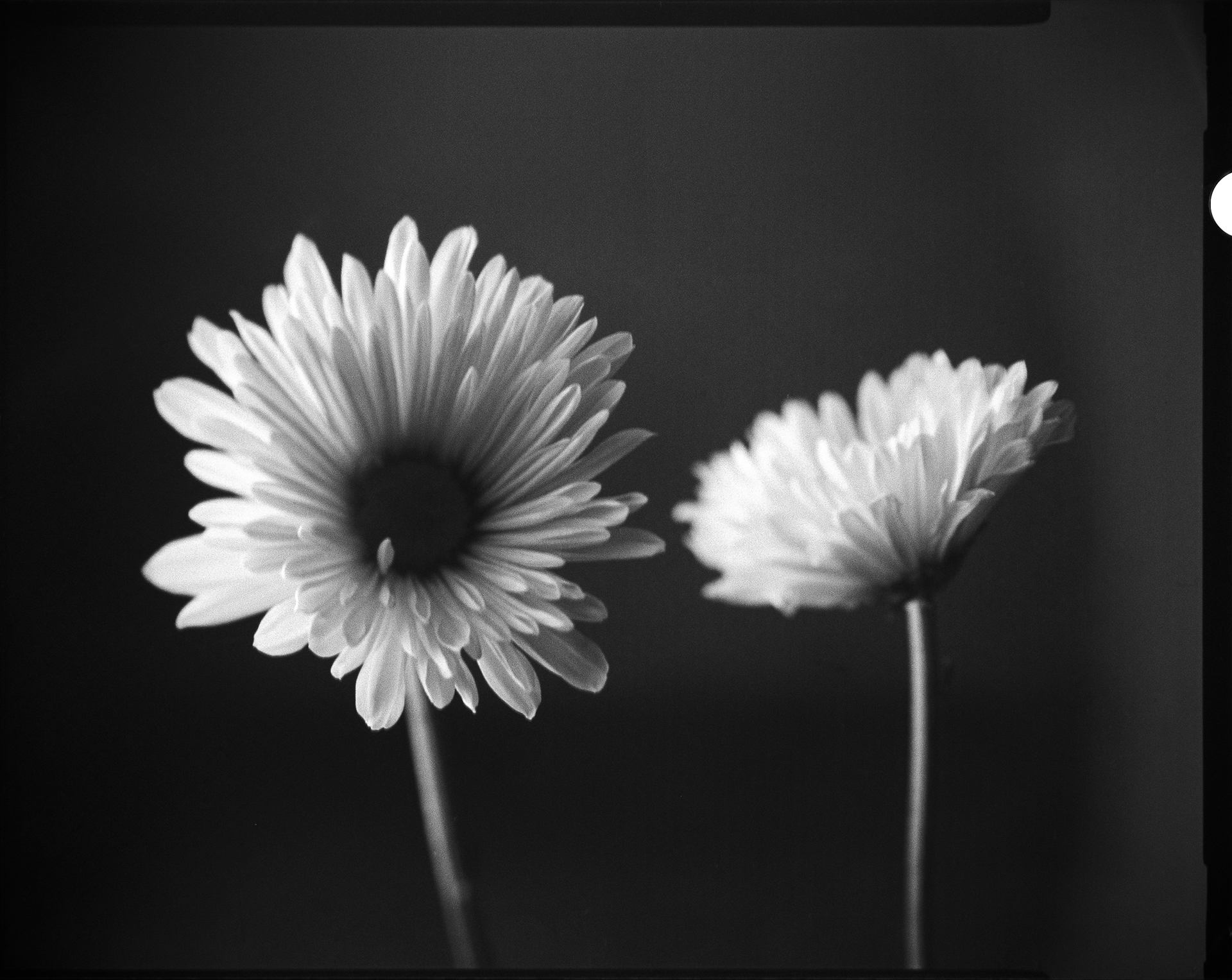
Intrepid 4×5 Mark V + Fujinon ES 90mm f/4.5
Welcome to Bonus Bites. This is where I’ll be dropping occasional tidbits, personal updates, and behind-the-scenes look at my work with B&W film.
You’ll find things such as my personal reciprocity failure tables, notes and tips on different film stocks, quotes and other miscellaneous information I find interesting or useful.
Think of it as a small, evolving collection of resources and ideas that I’m happy to share. Thanks for stopping by!
Reciprocity Failure Tables
The following tables are available for download as handy PDF files and are intended to be a great starting point for creating long-exposure photographs.
These times showcase only a small fraction of the vast film offerings available on the market, they are based solely on my personal shooting habits, some of the different films I have used over the years and my individual preferences.
NOTE: Reciprocity failure is not dependent on film size; instead, it’s a characteristic of the film’s silver halide emulsion. This phenomenon occurs when a film’s predictable response to light breaks down during extremely long or very short exposures, causing a loss of sensitivity and requiring a corrective adjustment in exposure.
Pinhole Exposure Guide
The following guide is available for download as a convenient and handy PDF file to help you correctly calculate the exposure when using an ONDU 6×12 Multiformat Pinhole Camera, in addition to this adjustment, you will need to compensate for your film’s reciprocity failure.
Film Type: Medium Format (120), Focal Length: 40mm, Pinhole Diameter: 0.25mm, Equivalent F-Stop: 160
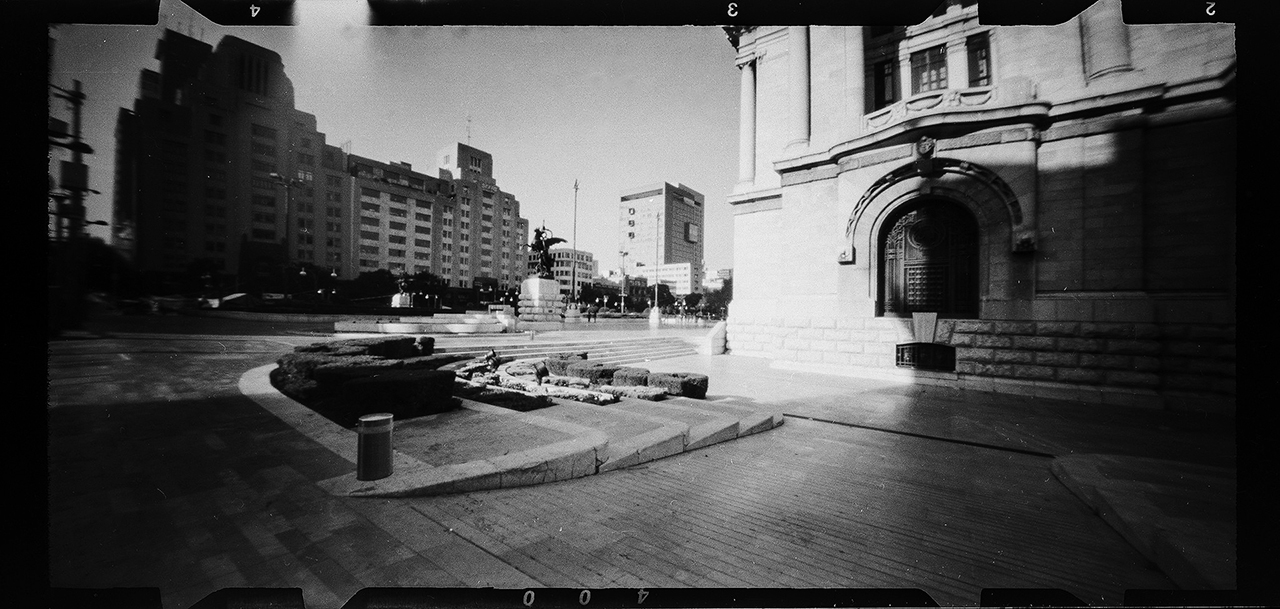
About pinhole cameras: A pinhole camera is a simple camera without a lens but with a tiny aperture (the so-called pinhole)—effectively a light-proof box with a small hole in one side. Light from a scene passes through the aperture and projects an inverted image on the opposite side of the box, which is known as the camera obscura effect. The size of the images depends on the distance between the object and the pinhole. (Source: Wikipedia)
Light in Photography
- In photography: essential to the art, application, and practice of creating images, either electronically by means of an image sensor, or chemically by means of a light-sensitive material such as photographic film, glass or paper.
- En photographie: essentiel à l’art, à l’application et à la pratique de la création d’images, soit électroniquement au moyen d’un capteur d’images, soit chimiquement au moyen d’un matériau sensible à la lumière tel qu’un film photographique, du verre ou du papier.
- In der Fotografie: wesentlich für die Kunst, Anwendung und Praxis der Bilderzeugung, entweder elektronisch mittels eines Bildsensors oder chemisch mittels eines lichtempfindlichen Materials wie fotografischen Filmen, Glas oder Papier.
- En fotografía: esencial para el arte, la aplicación y la práctica de crear imágenes, ya sea electrónicamente por medio de un sensor de imagen, o químicamente por medio de un material sensible a la luz como película fotográfica, vidrio o papel.
- Nella fotografia: essenziale per l’arte, l’applicazione e la pratica della creazione di immagini, sia elettronicamente mediante un sensore di immagine, sia chimicamente mediante un materiale sensibile alla luce come pellicola fotografica, vetro o carta.
- 写真において:イメージセンサーを使って電子的に、あるいは写真フィルム、ガラス、紙などの感光材料を使って化学的に画像を作成する技術、応用、実践に不可欠。
Photographic Film
Photographic film is a strip or sheet of transparent film base coated on one side with a gelatin emulsion containing microscopically small light-sensitive silver halide crystals.
The sizes and other characteristics of the crystals determine the sensitivity, contrast, and resolution of the film.[1] Film is typically segmented in frames, that give rise to separate photographs.
The emulsion will gradually darken if left exposed to light, but the process is too slow and incomplete to be of any practical use. Instead, a very short exposure to the image formed by a camera lens is used to produce only a very slight chemical change, proportional to the amount of light absorbed by each crystal. This creates an invisible latent image in the emulsion, which can be chemically developed into a visible photograph. In addition to visible light, all films are sensitive to ultraviolet light, X-rays, gamma rays, and high-energy particles.
Unmodified silver halide crystals are sensitive only to the blue part of the visible spectrum, producing unnatural-looking renditions of some colored subjects. This problem was resolved with the discovery that certain dyes, called sensitizing dyes, when adsorbed onto the silver halide crystals made them respond to other colors as well. First orthochromatic (sensitive to blue and green) and finally panchromatic (sensitive to all visible colors) films were developed.
Panchromatic film renders all colors in shades of gray approximately matching their subjective brightness. By similar techniques, special-purpose films can be made sensitive to the infrared (IR) region of the spectrum.
Film Sizes — Visual Reference
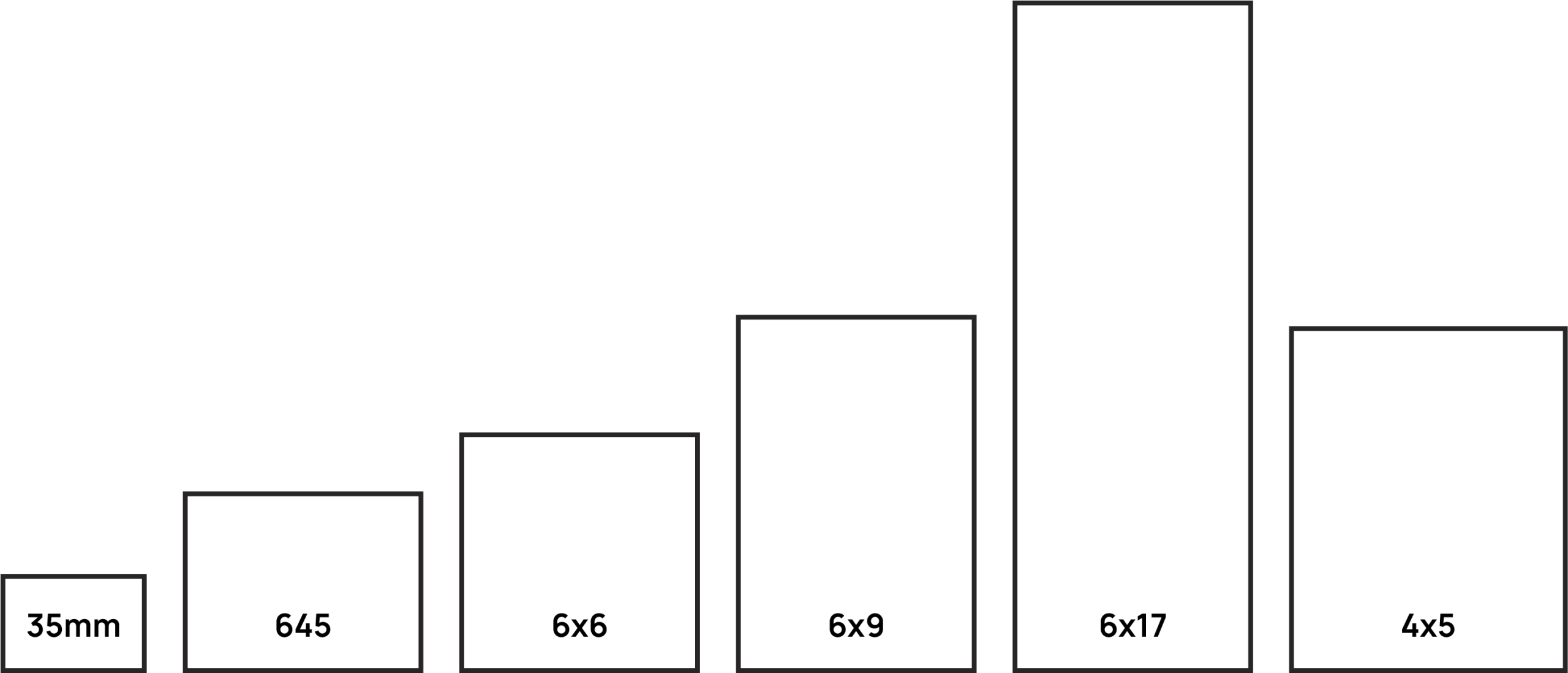
Ever wondered how 35mm film stacks up against a 4×5 sheet, or exactly how much larger a 6×9 frame is compared to a standard 35 mm negative?
This handy PDF file lays out common black-and-white film formats — from half-frame to large format — drawn to true relative proportions so the size relationships are immediately clear. Whether you’re curious about medium format before making a purchase, or just want a handy cheat sheet to keep around the darkroom, feel free to download now.
Kodak HC-110
Kodak Professional HC-110 is a concentrated liquid developer used to process black and white negative film and some graphic arts films and glass plates.
It is known for being highly versatile, economical, and easy to use. The developer’s high concentration allows for a large volume of working solution from a small amount of concentrate, and photographers can control contrast by using different dilutions.
These are commonly used dilutions and their corresponding ratios of HC-110 concentrate to water:
- Dilution A: 1 part concentrate to 4 parts water (1:4).
- Dilution B: 1 part concentrate to 31 parts water (1:31).
- Dilution E: 1 part concentrate to 47 parts water (1:47).
- Dilution H: 1 part concentrate to 63 parts water (1:63).
How to Mix
Determine your total working solution volume: For example, if you need 32 ounces (about 1 liter) of working solution.
Calculate the concentrate amount: For Dilution B, you’ll need 1 ounce of concentrate.
Add the water: Add 31 ounces of water to the concentrate to make your working solution.
Common Uses for Specific Dilutions
- Dilution B:
A popular choice for small tank processing and is a great starting point for developing 35mm and 120 film. - Dilution H:
An unofficial half-strength version of Dilution B, offering lower contrast, longer development times, and increased economy by using less concentrate. - Dilution E:
Used for developing lower-contrast film or for specific effects, such as achieving finer grain and lower contrast than with Dilution G. - Dilution A:
A higher-strength solution that produces more contrast, finer grain, and increased acutance but uses less shadow detail compared to other dilutions.
Quotes & Reflections
If you were to ask me to define a photograph in a few words, I would say it is “a fossil of light and time.”
– Daido Moriyama
Tout finit par se connecter – les gens, les idées, les objets. La qualité des connexions est la qualité en soi.
– Charles Eames
Por la vista el mal y el bien nos llegan,
Ojos que nada ven, almas que nada esperan.– Carlos Pellicer
If there is one point, it’s humanity, it’s life, the richness of life. The thing is simply to be sensitive.
– Henri Cartier-Bresson
Toutes les images disparaîtront.
– Annie Ernaux (Les Années, 2008)
Je n’ai pas peur de la route
Faudrait voir, faut qu’on y goûte
Des méandres au creux des reins
Et tout ira bien là, le vent nous portera– Le vent nous portera (Noir Désir, 2001)
Il ne faut jamais désespérer puisque tout finit bien par s’aggraver.
– Jacques Sternberg
J’espère que ce livre ne sera jamais lu.
– Marguerite Yourcenar
I consider beauty a basic requirement of life.
– Walter Gropius
I am an architect with a passion for nature’s lessons and man’s interventions.
– Balthazar Korab
De todos los animales de la creación, el hombre es el único que bebe sin tener sed, come sin tener hambre y habla sin tener nada que decir.
– John Steinbeck
To create a work of art, the tools you use must themselves be a work of art, they should inspire and encourage the artist to create a masterpiece.
– Japanese Artistic Belief
Light makes photography. Embrace light. Admire it. Love it. But above all, know light. Know it for all you are worth, and you will know the key to photography.
– George Eastman
I do not claim to have perfected an art but to have commenced one, the limits of which it is not possible at present exactly to ascertain.
– Henry Fox Talbot
Repasé durante toda la mañana mis viejas cosas en maletas; he roto mucho. A veces esto es doloroso, pero bendigo no tener nada. De ahora en adelante lo que tengo tendrá sólo que ver con la fotografía; el resto, incluso cosas que amo, cosas concretas, las transformaré en abstractas para poder poseerlas para siempre en el corazón.
– Tina Modotti a Edward Weston, Carta del 8 de febrero de 1926
The best thing about a picture is that it never changes, even when the people in it do.
– Andy Warhol
Die Qualität des Kochweins sollte immer Trinkqualität haben.
– Harald Rüssel
Exploration is in our nature. We began as wanderers, and we are wanderers still. We have lingered long enough on the shores of the cosmic ocean. We are ready at last to set sail for the stars.
– Carl Sagan
Before enlightenment, chop wood, carry water.
After enlightenment, chop wood, carry water.– Zen Proverb
Openly defective is the lover you elected and
A portrait she was bound to portray.– Sick Love, Red Hot Chili Peppers